Cluster C — Core service · 6 min read
Ball Moss: Does It Hurt Your Trees and Should You Remove It?
By San Antonio Tree Care Team•Published: 2026-03-20•Updated: 2026-10-09
Debunking the Parasite Myth: What Ball Moss Actually Is
One of the most persistent misconceptions among San Antonio homeowners is that ball moss (Tillandsia recurvata) is a parasitic plant that sucks sap and nutrients from living tree branches. In botanical reality, ball moss is a non-parasitic epiphyte (air plant) belonging to the bromeliad family, closely related to Spanish moss and pineapples.
Ball moss possesses no true root system; instead, it develops small pseudo-roots (holdfasts) that merely anchor the plant to rough tree bark. It manufactures all of its own nutrients through photosynthesis, absorbing atmospheric moisture, dust, and dissolved airborne minerals through specialized cellular hairs (trichomes) on its leaves. Ball moss does not penetrate living cambium or steal moisture from your trees.
When Ball Moss Becomes Harmful: Canopy Shading & Mechanical Weight
Although ball moss is not physiologically parasitic, heavy, untreated infestations can still severely damage shade trees through secondary mechanical and physical stress. In neglected live oaks and cedar elms, thousands of dense ball moss spheres can carpet interior scaffold limbs.
When ball moss colonies become exceptionally dense, they block sunlight from reaching interior dormant buds, preventing trees from producing new inner foliage. Furthermore, after heavy Texas rainfall, ball moss absorbs up to five times its dry weight in water. This massive accumulated biomass adds thousands of pounds of dead weight to horizontal limbs, significantly increasing branch breakage during severe windstorms and winter freeze events.
Call back within 15 minutes, on site within 2 hours inside Loop 1604
Dealing with Tree Hazards on Your Property?
Call our licensed San Antonio arborists now for 24/7 emergency dispatch or a free on-site estimate.
City of San Antonio Tree License · $1M+ General Liability · Zero Obligation Estimates
Why Dead Wood Attracts Ball Moss: Sunlight & Humidity Dynamics
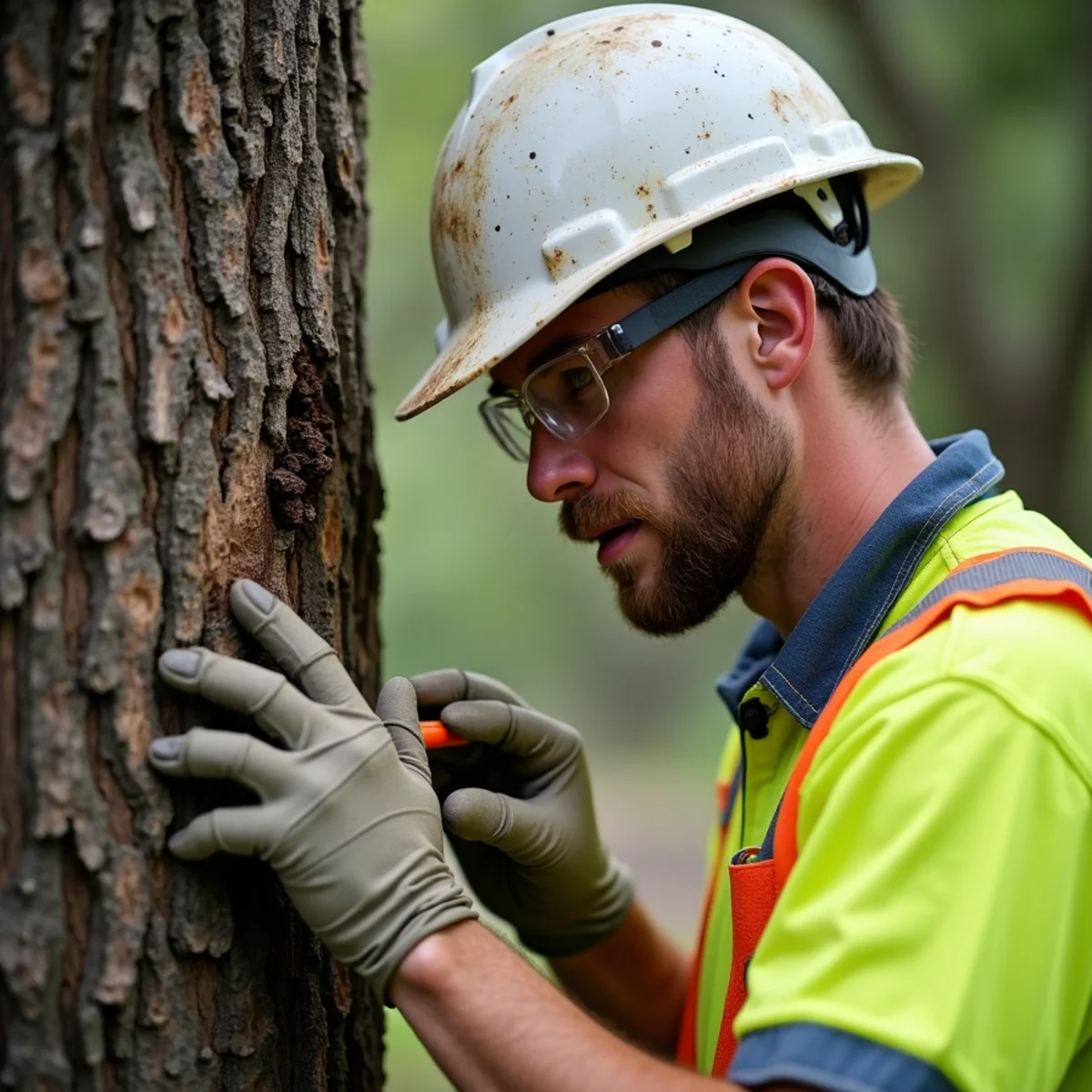
Homeowners frequently observe that ball moss seems to flourish on dead, decaying branches and conclude that the moss killed the branch. In arboricultural fact, the reverse is true: natural canopy dieback created the ideal environment for ball moss to colonize.
When lower interior branches die naturally from self-shading, they shed their leaves, allowing unobstructed sunlight and air currents to reach the bare wood. Airborne ball moss seeds, equipped with feathery parachutes, easily catch in the fissured bark of dead limbs. The presence of dense ball moss is an indicator that a tree has accumulated substantial interior deadwood that requires structural crown cleaning.
Mechanical Removal: ANSI A300 Hand-Picking vs. Chemical Sprays
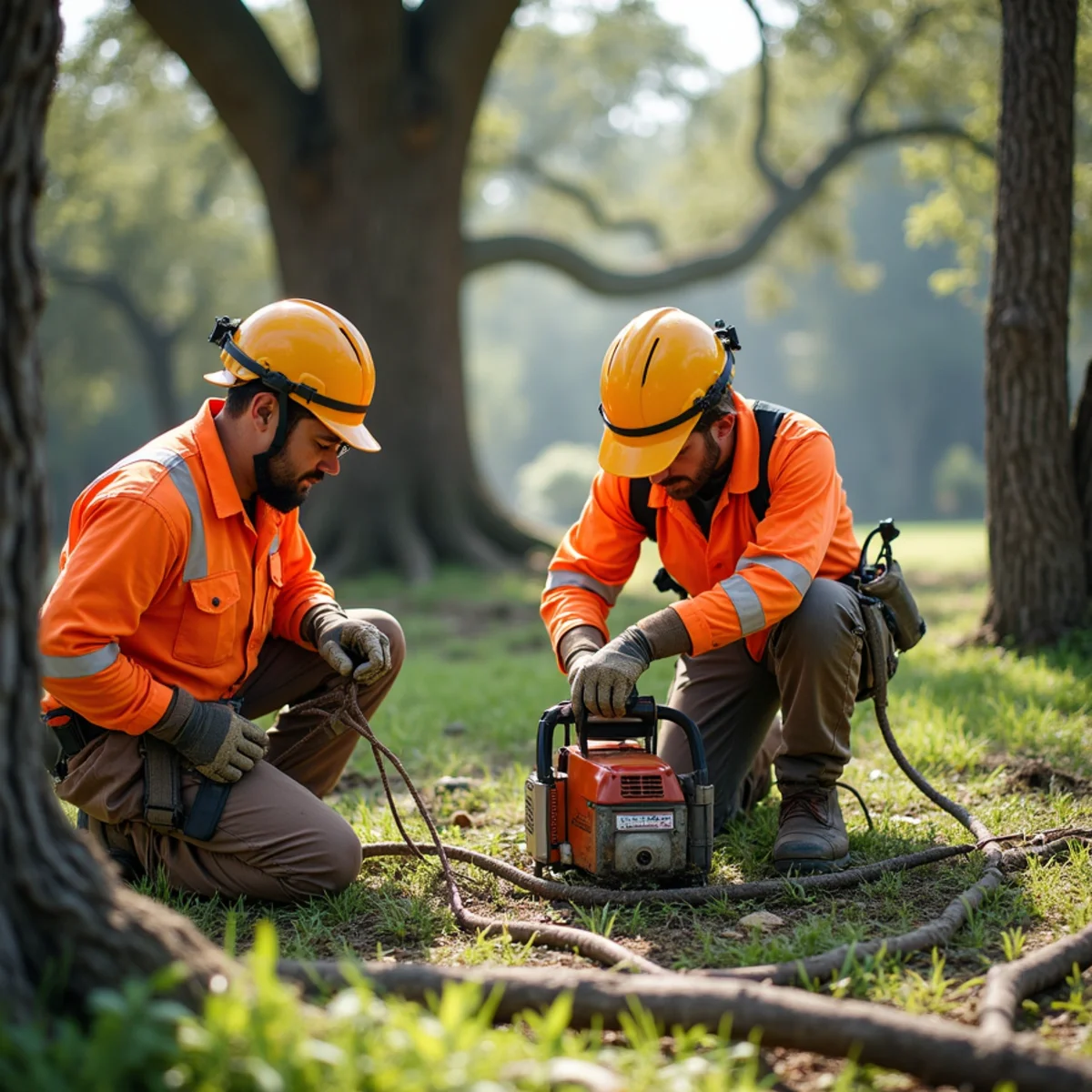
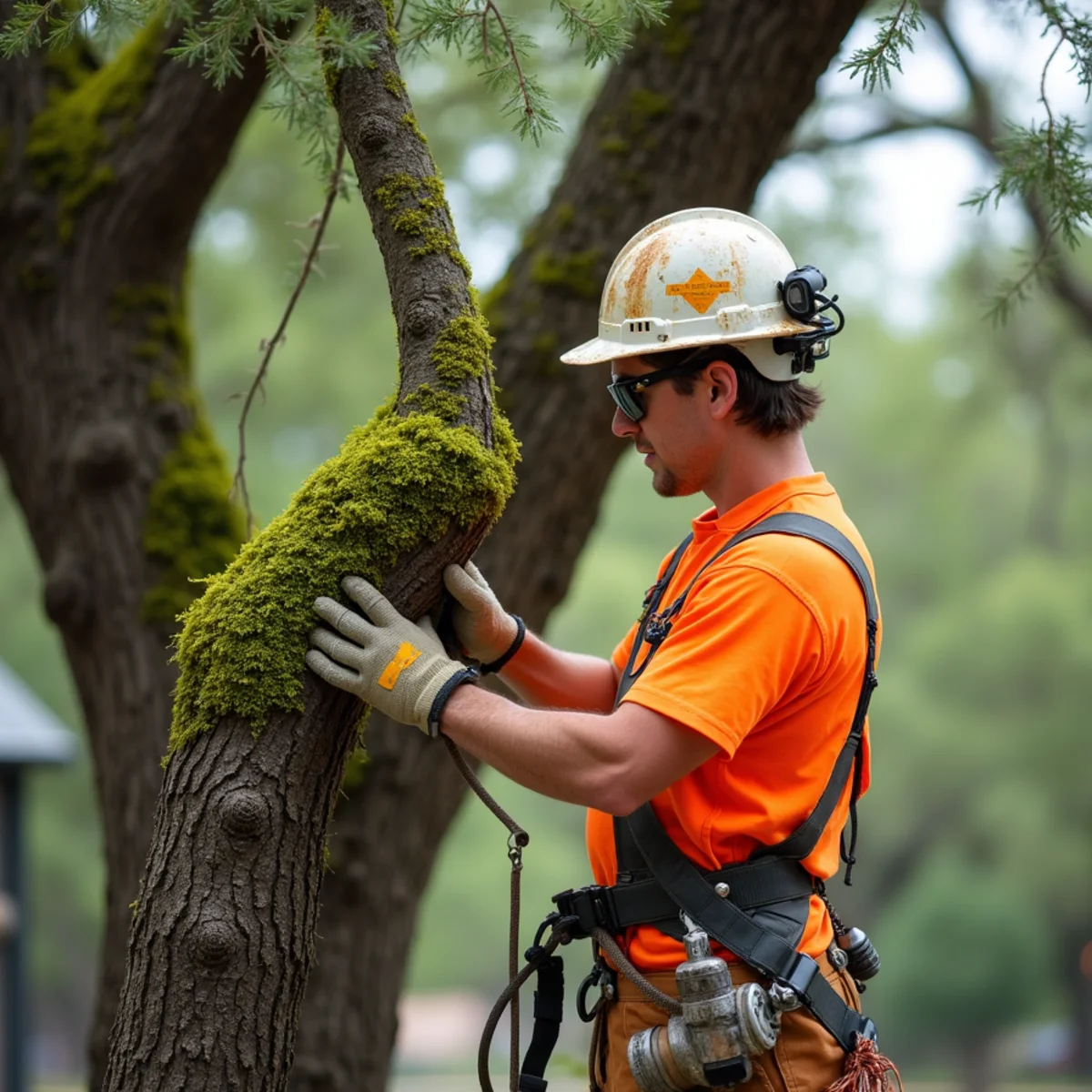
When managing ball moss in San Antonio, certified arborists rely primarily on mechanical extraction rather than chemical sprays. Our arborist climbers ascend into the canopy using ropes and saddles, methodically hand-picking and gently scraping moss clusters from living branches using specialized arborist moss hooks.
Simultaneously, crews prune away all underlying dead, decayed, and crossing branches back to sound branch bark ridges. Combining mechanical ball moss extraction with professional crown thinning removes both the epiphyte and its preferred host environment in a single visit, allowing sunlight to penetrate deep into the canopy and stimulating vibrant new inner foliage.
The Truth About Copper Fungicide & Baking Soda Sprays
Property owners frequently ask about chemical sprays to eliminate ball moss without climbing. Potassium bicarbonate (baking soda) solutions or copper hydroxide fungicides (such as Kocide) can kill ball moss by disrupting its mineral uptake and cellular membranes.
However, chemical sprays have significant practical drawbacks. First, dead ball moss does not drop off the tree; it remains stuck to branches for two to three years until it slowly rots away, leaving trees looking gray and unkempt. Second, copper sprays can cause leaf burn (phytotoxicity) on tender spring oak foliage and can stain residential masonry, concrete flatwork, and painted siding. Mechanical hand-picking delivers immediate, clean results.
Common Questions Related to This Guide
No. Ball moss is an epiphyte, not a parasite; it does not extract sap or nutrients from living wood. However, severe infestations can block sunlight from interior dormant buds and add substantial water weight that increases limb breakage during storms.
Related Services & Local Coverage
Explore professional services and local neighborhoods mentioned in this guide:
Call back within 15 minutes, on site within 2 hours inside Loop 1604
Protect Your Trees & Property with San Antonio's Best
Speak with our certified arborist team today. Transparent estimates, licensed crews, and 24/7 response.
City of San Antonio Tree License · $1M+ General Liability · Zero Obligation Estimates